
Views: 2 Author: Site Editor Publish Time: 2026-10-06 Origin: Site


U660E, U760E, U760F and UA80E do not describe one simple model progression. Toyota technical data places U660 and U760 within the previous 6-speed automatic transaxle range, while UA80 belongs to the later Direct Shift-8AT architecture. Within each family, the complete gearbox code identifies a variant—but it still does not guarantee that every internal component shares the same revision.
For parts matching, these codes are best treated as successive identification boundaries: first resolve the gearbox generation and family, then the exact variant, and only then determine whether the target component requires a further production or part-number check.
Toyota's own automatic-transaxle torque-band diagram lists U760, U660 and U880 as separate previous-generation transaxles. U660 and U760 therefore should not be interpreted as a simple old-version / new-version pair.
Toyota developed UA80 and UB80 as a new front-wheel-drive 8-speed transaxle family. Toyota Technical Review states that these two new units cover torque bands that had previously required three transaxle types, while using a redesigned gear train and a new commonization strategy.
Super5 maintains U660, U760 and UA80 as separate complete-gearbox records. These first-party product images provide family-level visual context; they are not evidence that similarly positioned internal components are interchangeable.
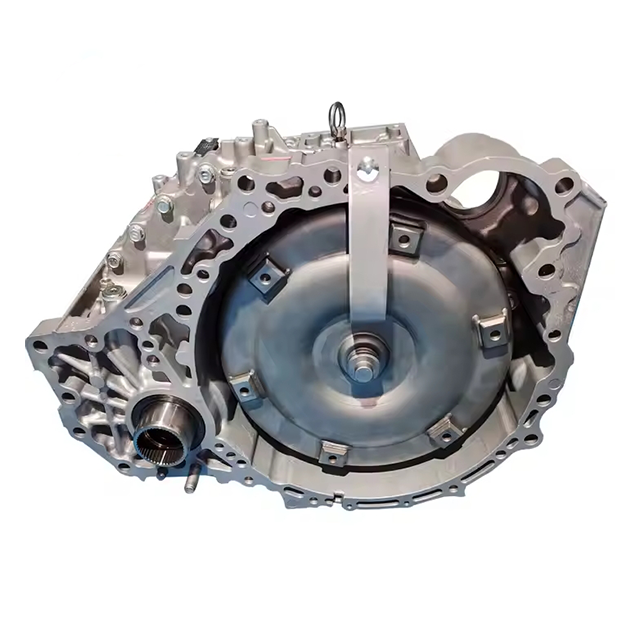
A separate 6-speed family record in the Super5 gearbox catalogue.
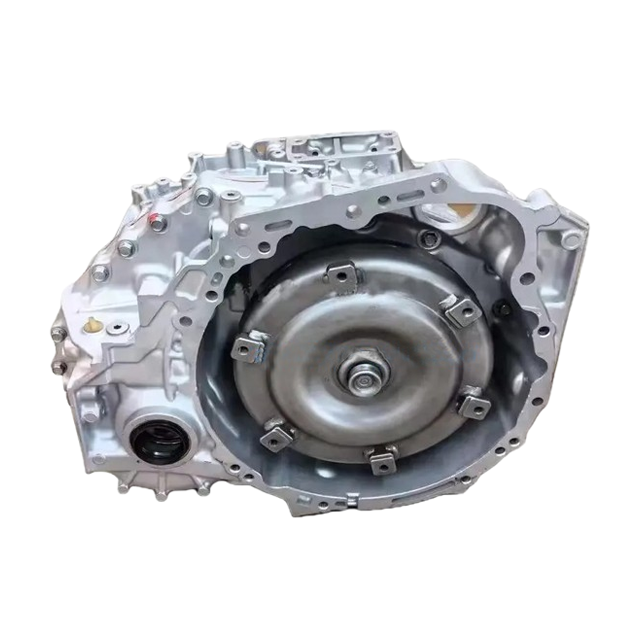
Kept separate from U660 even though both belong to Toyota/Aisin 6-speed applications.
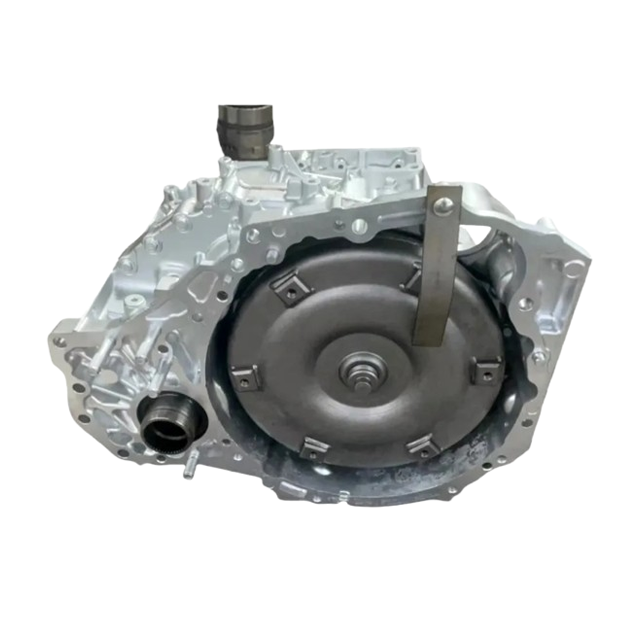
A Direct Shift-8AT family record rather than an extension of the earlier U660/U760 6AT group.
| Code | What It Establishes | What Still Requires Verification |
|---|---|---|
| U660E | U660 gearbox family plus the E variant | Exact component number, service revision and any production-dependent internal part. |
| U760E | U760 gearbox family plus the E variant | Whether a valve body, solenoid, friction set or other part is shared with another U760 variant. |
| U760F | U760 family with a different drivetrain configuration from U760E in Toyota applications | Component interchange cannot be inferred from the shared U760 family name. |
| UA80E | UA80 Direct Shift-8AT family plus the E variant | Production-sensitive internal hardware can still require serial-number or revision evidence. |
Toyota service documentation distinguishes E and F variants in drivetrain applications. That suffix must therefore remain part of the full gearbox identity.
Toyota's UA80E/F service information records an internal B1 clutch production change. The gearbox model remained UA80E/F, but Toyota used manufacturing plant, transmission serial number and production date to distinguish the revised clutch configuration.
Establishes the Direct Shift-8AT gearbox family.
Establishes the specific Toyota drivetrain variant.
Becomes relevant when Toyota documents a running production change affecting the target internal component.
The final replacement still has to resolve to the applicable OE/service number or verified component configuration.
Super5's current catalogue separates the U660, U760 and UA80 complete gearbox families, while the site's parts-identification methodology treats the gearbox code as one evidence layer rather than a universal part number.
This separation is especially important when a workshop moves from a complete gearbox enquiry to a valve body, solenoid, clutch component or overhaul part. The family name remains useful, but the matching evidence must become more specific as the component becomes more specific.
U660E, U760E, U760F and UA80E represent different levels of gearbox identity. U660 and U760 belong to separate families in Toyota's previous 6-speed range. UA80 belongs to the later Direct Shift-8AT architecture. E/F preserves a variant distinction, while some internal components can require a further production-revision check.
The practical matching hierarchy is therefore:
A vehicle model may help narrow the search. A gearbox code defines the technical context. The final component identity still has to be proven at the component level.


